
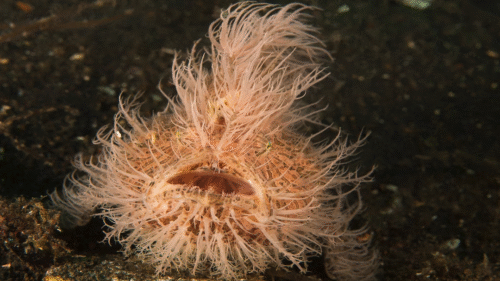
The hairy frogfish (Antennarius striatus) is one of the ocean’s most mesmerising masters of camouflage. With its wild “hair,” expressive face, and ability to shift into an astonishing range of colours, it has become a signature species for muck divers and macro photographers. While its unusual body shape draws curiosity, it’s the variety of hairy frogfish colour morphs that truly capture hearts. Each morph gives subtle clues about habitat, behaviour, and environmental conditions, turning every encounter into a tiny puzzle waiting to be understood. For divers visiting hotspots such as Lembeh Resort, these morphs offer endless surprises.
What Determines Hairy Frogfish Colour Morphs?
The colours of the hairy frogfish are not fixed; they can shift over time as the frogfish adapts to its surroundings. Unlike fast-changing cephalopods, frogfish morph gradually, sometimes taking days or weeks to blend in. Their appearance results from several interconnected factors that influence pigmentation and texture:
- Genetics play a foundational role in determining the frogfish’s starting palette.
- Habitat drives adjustments, matching algae, sponges, sand, or rubble.
- Diet and water conditions may subtly affect pigmentation.
- Stress, reproduction, or moulting cycles can trigger temporary colour variations.
For divers learning hairy frogfish ID, understanding these influences helps explain why two frogfish occupying nearby patches of sand may look entirely different.
The Most Iconic Hairy Frogfish Colour Morphs
Orange Morph
The orange morph is one of the most recognisable variations and is a favourite among photographers. Often seen perched on or near orange sponges or algae, this colour morph blends spectacularly with warm-toned environments. Juveniles in particular display striking orange hues, possibly as a natural mimicry strategy that protects them during their early, vulnerable growth stages. Over time, the colour may darken or shift depending on changes in the substrate or habitat movement.
Yellow Morph
A bright yellow hairy frogfish is a true underwater treasure. These morphs are frequently encountered on sandy slopes or algae-rich areas where sunlight intensifies the yellow tones. Their colouration allows them to mimic drifting sargassum or sunlit debris, giving them a tactical advantage as ambush predators. Yellow morphs are known to shift more quickly than darker varieties, especially when they settle into new surroundings with different light exposure.
Black Morph
Perhaps the most commonly encountered morph in volcanic sand environments, the black hairy frogfish thrives in deeper, low-light muck sites. Locations like Lembeh Resort and Ambon Bay are iconic for sightings of these dark individuals. Their deep colour provides perfect camouflage on black sand, and the contrast highlights their long dermal filaments, giving them an especially “shaggy” look. The black morph often indicates stable substrates where the frogfish remains in ambush for extended periods.
White / Cream Morph
The white or cream morph is one of the rarest and most photogenic. Found on pale rubble fields or bleached coral patches, these frogfish appear luminous under soft light. Because pale morphs typically adapt faster, divers may notice subtle colour shifts within just a few days if the frogfish relocates. Spotting one is considered a highlight even in world-class macro destinations, as its snowy appearance is both delicate and dramatic.
Brown / Tan Morph
Brown or tan morphs are the most versatile and widely distributed. These neutrals help frogfish blend seamlessly with fallen leaves, driftwood, and debris fields, making them nearly invisible to untrained eyes. This morph often indicates a sedentary frogfish that has remained in the same area for weeks. Tan morphs are particularly common in classic muck habitats where decaying organic matter accumulates.
Green Morph
Green hairy frogfish are often misunderstood. In many cases, the frogfish isn’t naturally green—algae grows on its filaments, giving it a mossy, textured look. This morph is most likely to appear in calm, nutrient-rich zones where algae thrive. Because the frogfish remains perfectly still for long periods, it becomes a living garden, blending into seaweed-covered or algae-rich environments.
Pink / Red Morph (Rare)
Among all morphs, the pink or red frogfish is arguably the most stunning. These individuals sometimes mimic soft corals or vibrant sponges, blending flawlessly into colourful benthic habitats. While extremely uncommon, sightings are often documented in macro-heavy destinations with dense sponge coverage. Scientists suggest diet and environmental cues may influence these rich pigments.
Special Morphs and Transitional Phases
Shaggy vs Smooth Phase
One of the most fascinating features of the hairy frogfish is its ability to retract its iconic filaments. Stress, relocation, or environmental shifts may cause the frogfish to temporarily appear smooth or “bald,” making it almost unrecognisable. This change does not indicate illness, rather, it’s part of its natural adaptive repertoire.
Sponge Mimic Morphs
Some individuals develop intricate markings that mimic sponge textures, including tiny pore-like patterns. These adaptations likely evolve, helping the frogfish merge into sponges with extraordinary precision. This morph demonstrates one of the most advanced levels of camouflage in the frogfish family.
Debris / Leaf Mimic Morphs
Muted browns and mottled, irregular textures allow these frogfish to imitate drifting leaves or soft sediment. These morphs are especially successful in silty muck sites where organic material collects. Divers often swim past these frogfish unknowingly due to their remarkable cryptic behaviour.
Seasonal Shifts
Weather patterns, water movement, and reproductive cycles may temporarily influence pigmentation. After storms or during spawning periods, frogfish sometimes exhibit transitional colours before settling into a stable morph again. These shifts provide insight into the frogfish’s adaptability to micro-environmental changes.
What These Morphs Indicate for Divers
Understanding colour morphs can help divers predict where frogfish are likely to hide. Bright morphs usually signal sponge-heavy or sunlit habitats, while darker shades indicate volcanic sand or shadowed muck terrain. Green or mottled morphs hint at algae-rich or debris-covered zones. Recognising these clues helps divers scan the environment more efficiently, enhancing both frogfish spotting skills and ecological awareness.
Underwater Photography Tips for Colour Morphs
Capturing the true colour and texture of hairy frogfish requires patience and thoughtful lighting. Soft diffused light works best to preserve the delicate detail of dermal filaments and natural hues. Dark morphs benefit from angled strobes or slight ISO increases to avoid colour collapse. Meanwhile, bright morphs such as orange or yellow should be photographed with reduced strobe intensity to prevent harsh highlights. A 60mm or 105mm macro lens remains ideal for both full-body portraits and detailed close-ups.
Conservation Note
Muck ecosystems supporting hairy frogfish are fragile environments, easily affected by pollution, sedimentation, and heavy diver traffic. Good buoyancy control prevents substrate disturbance, while minimising strobe flashes reduces stress on the animal. Responsible diving ensures these unique species and their extraordinary colour morphs continue to thrive in their delicate habitats.
Conclusion
The incredible range of hairy frogfish colour morphs highlights the species’ extraordinary adaptability and talent for mimicry. Whether glowing orange, jet-black, mossy green, or creamy white, each morph offers clues about its environment, behaviour, and ecological niche. For divers and photographers, recognising these morphs transforms every sighting into a deeper, more meaningful encounter with one of the ocean’s most enigmatic creatures.


