
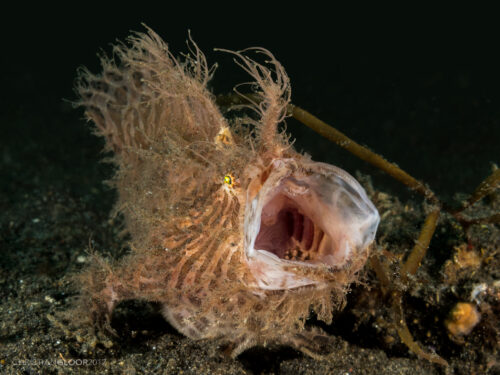
The hairy frogfish is a favourite among divers, underwater photographers, and marine-life enthusiasts for one simple reason: it is one of the ocean’s greatest masters of disguise. Spotting one in the wild often feels like unlocking a hidden level of muck diving, especially for beginners learning how to recognise subtle patterns and movements on sandy or rubble-covered slopes. If you want to dive deeper into this extraordinary species, you can also explore this detailed article on the hairy frogfish for more information.
This guide will walk you through the key features, behaviours, and habitats that will help you confidently identify one underwater.
What Makes the Hairy Frogfish Unique?
The hairy frogfish (Antennarius striatus) stands out among frogfish species because of its bizarre, shaggy appearance and the sophisticated hunting techniques it uses. While most fish rely on speed or agility to catch prey, the hairy frogfish uses stealth and deception, remaining perfectly still until it strikes at lightning-fast speeds. Its “hair,” actually made up of modified skin filaments called spinules, gives it a distinctive texture that mimics its surroundings. This camouflage makes it incredibly effective at blending into muck diving landscapes, debris fields, and algae-covered areas. Combined with a lure resembling a worm or small shrimp, the hairy frogfish is a living example of how evolution can produce creatures perfectly tailored to their environment.
Key Physical Features to Recognise
The “Hairy” Filaments
The hair-like spinules that give the hairy frogfish its name are its most notable feature. These strands are not true hair but modified skin that grows in varying lengths and densities depending on the individual. In areas rich in algae, frogfish often develop longer, wilder filaments that help them blend in, while those living in sandy environments may appear less hairy. These filaments sometimes collect algae and debris, further enhancing their disguise. For beginners, recognising these uneven, wispy filaments is often the first big clue.
Body Shape and Texture
The hairy frogfish has a compact, round body covered with bumps, tubercles, and uneven textures that mimic its surroundings. It comes in a wide range of colours, bright orange, dull brown, jet black, pale yellow, or mottled green, allowing it to adapt beautifully to different habitats. It’s important to remember that colour alone isn’t a reliable identification marker, as frogfish can change shades over time. Instead, look for the unusual combination of shape, texture, and hair-like filaments.
The Esca (Lure)
One of the most effective ways to identify a hairy frogfish is by observing the esca, its fleshy lure that sits at the end of a modified dorsal spine. This lure resembles anything from a small shrimp to a worm or tuft of algae, and the frogfish flicks it rhythmically to attract prey. When you notice something wiggling independently on a seemingly stationary mound of sand or algae, look closer, there is a good chance you’ve found a frogfish.
The Oversized Mouth
The hairy frogfish has an enormous, expandable mouth that can gulp down prey nearly its own size. The signature “big yawn” is a behavioural giveaway, but even when closed, the wide, upturned mouth is distinctive. Once you become familiar with the frogfish’s facial structure, recognising one becomes much easier, even when most of its body is camouflaged.
Behavioural Clues to Help You Spot One
Jerky Walking Movements
Unlike most fish, frogfish don’t swim gracefully. They “walk” along the substrate using their modified pectoral fins in a jerky, awkward motion. This unique movement style is one of the easiest behaviours to recognise, and if you see a creature shuffling across the sand like this, pay attention—you may be observing a frogfish on the move.
Ambush Hunting Strategy
Hairy frogfish are ambush predators, which means they tend to stay perfectly still for long periods. They prefer to remain invisible and let prey come to them rather than expending energy hunting. This behaviour makes them challenging to find, but it also means that once you know where to look—on algae patches, rubble, or volcanic sand slopes—they become easier to detect.
Camouflage Switching
Hairy frogfish are masters of transformation. They can change both their colour and skin texture over weeks or months to match their habitat. This makes it crucial to pay attention not just to colour, but also to the body’s shape, the presence of filaments, and the lure. Learning to recognise subtle texture contrasts often helps beginners find their first frogfish.
Typical Habitats and Where to Look
Hairy frogfish thrive in muck diving environments, which are rich in nutrients and smaller marine life. These habitats may look dull at first glance, but they are home to many cryptic species. Sandy slopes, volcanic ash, rubble beds, and areas with driftwood or discarded debris are ideal places to scan.
In Indonesia, hotspots include Lembeh Strait, Ambon Bay, Alor, Bali, and even certain parts of Sulawesi. Beyond Indonesia, the species can also be found in Anilao (Philippines), Papua New Guinea, Japan, and parts of the Western Pacific. They are often located at depths of 5-25 metres, making them accessible even to beginner divers with good buoyancy control.
How to Improve Your Chances of Finding One
To maximise your chances of spotting a hairy frogfish, adjust your diving habits to fit the slow and quiet pace of muck environments. Move slowly and keep your eyes close to the ground rather than scanning broadly. Frogfish often blend so well that only small movements, like a flick of the lure or a slight breathing pattern, give them away.
- Move very slowly and scan the substrate carefully.
- Don’t disturb sand or silt, as visibility drops quickly.
- Look for small movements such as the flick of a lure or a breathing pattern.
- Pay attention to oddly shaped clumps or lumps of algae.
- Dive with a guide who knows frogfish hotspots, experience matters.
Patience is key. Many divers swim past frogfish without realising it, simply because they are moving too quickly to notice the small details.
Common Mistakes Beginners Make
A common mistake is assuming frogfish will be colourful or obvious, when in reality they are often camouflaged so well that they look like part of the landscape. Many divers confuse them with sponges, algae, debris, or even stones. Juvenile frogfish are especially easy to overlook, as they tend to be smoother and less hairy.
Other common errors include ignoring artificial debris like ropes, cans, or driftwood, which often attract frogfish. Also, beginners tend to swim too fast, missing the slight movements that give a frogfish away.
Hairy Frogfish vs Shaggy Frogfish
Although the names are often used interchangeably, the hairy frogfish (Antennarius striatus) is different from the shaggy frogfish (Antennarius hispidus). Hairy frogfish generally have longer, more flexible filaments, giving them a wilder appearance. Shaggy frogfish, on the other hand, have shorter, stiffer hairs and a slightly different lure structure. Observing the esca is one of the best ways to distinguish species, as each species has a unique lure shape. These subtle differences become easier to spot with experience.
Ethical Tips for Observing Frogfish
Watching a hairy frogfish is an exciting experience, but responsible behaviour is essential to protect them. Frogfish are delicate and easily stressed. Touching them, moving them for photos, or using overly harsh lighting can harm them or force them into unsafe situations. Maintaining excellent buoyancy helps you avoid damaging the surrounding environment, especially in muck habitats where life is fragile.
- Never touch or move a frogfish.
- Avoid forcing them to move for a better photo.
- Maintain excellent buoyancy.
- Reduce direct flash intensity to avoid stress.
Good diving etiquette ensures that future divers can enjoy seeing these fascinating creatures, too.
Conclusion
Identifying a hairy frogfish takes patience, practice, and a trained eye, but the reward is unforgettable. Once you learn to recognise their hairy filaments, unusual movements, and typical environments, you’ll find yourself spotting them more often and appreciating the beauty of muck diving on a deeper level. With time and experience, even the most cryptic frogfish will begin to reveal themselves, turning every dive into a thrilling treasure hunt beneath the surface.


