
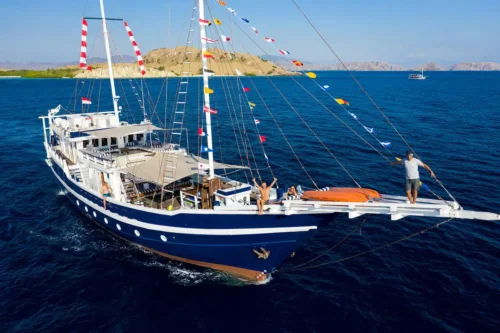
The world of underwater exploration has been transformed by the evolution of diving boats, which have progressed from humble beginnings to sophisticated vessels that cater to today’s divers. From wooden fishing boats used by coastal communities to luxurious liveaboards, this journey reflects both technological advancements and a growing passion for marine discovery. In Indonesia, a diving hotspot with destinations like Raja Ampat and Komodo, the shift is evident in iconic Phinisi yachts blending tradition with modernity.
The Origins: Wooden Fishing Vessels and Early Diving
Diving boats trace their roots to traditional wooden fishing vessels, crafted by hand from local timber. In Indonesia, these boats were initially used by fishermen and pearl divers along the coasts of Sulawesi and Papua. Built with durability in mind, they featured simple designs with outriggers for stability, allowing divers to explore shallow reefs manually. Lacking modern equipment, early divers relied on breath-holding techniques, with boats serving as both basic transportation and resting points. This era, spanning centuries, laid the foundation for diving, though safety and comfort were limited. The cultural significance of these vessels endures, influencing modern designs such as the Phinisi yachts.
The Rise of Specialized Diving Boats
The mid-20th century marked a turning point with the advent of scuba diving, pioneered by Jacques Cousteau. This innovation demanded specialized diving boats equipped with compressors for air tanks and storage for gear. Wooden hulls evolved into fibreglass and steel, offering greater durability and speed. In Indonesia, operators began adapting local boat-building techniques to meet these needs, creating vessels capable of longer trips to remote sites, such as Komodo. These boats featured basic dive platforms and shaded areas, improving safety and accessibility. This period saw diving boat designs shift from utilitarian to purpose-built, catering to the growing global dive community.
The Liveaboard Revolution
The late 20th century introduced liveaboards, transforming diving boat experiences into multi-day adventures. These vessels, often made of steel or aluminium, were designed for extended stays at sea, equipped with cabins, kitchens, and dive decks. In Indonesia, the rise of liveaboard tourism coincided with the growing popularity of Raja Ampat, where divers sought pristine reefs that were previously unreachable by day trips. Modern liveaboards now feature amenities such as hot showers, satellite navigation, and nitrox systems, enhancing both comfort and dive quality. This evolution reflects a demand for immersive travel, with diving boat operators investing in technology to explore deeper and more remote waters.
The Phinisi Yacht: A Blend of Tradition and Innovation
Indonesia’s Phinisi yachts stand out as a unique evolution of diving boats, merging traditional craftsmanship with modern functionality. Originally trading vessels built by the Bugis and Makassar people, Phinis are now repurposed as luxury liveaboards. Constructed from ironwood and teak, they retain hand-carved elegance while incorporating advanced engines, stabilizers, and dive platforms. In Raja Ampat and Komodo, Phinis offer week-long itineraries, showcasing biodiversity hotspots. Their eco-friendly designs, such as solar panels and waste management systems, align with sustainable dive travel trends. This fusion of heritage and innovation makes Phinisi yachts a symbol of Indonesia’s evolution in diving boat design.
Technological Advancements in Modern Diving Boats
Today’s diving boats are marvels of technology, designed for safety, efficiency, and environmental care. GPS and sonar systems ensure precise navigation to dive sites, while onboard compressors and rebreathers extend dive times. Many vessels feature eco-friendly technologies, such as hybrid engines and water purification systems, which reduce their carbon footprint. In Indonesia, operators are adopting these innovations to protect fragile ecosystems, such as coral reefs, which are threatened by mining and climate change. Modern diving boats also prioritize diver comfort with spacious cabins, Wi-Fi, and underwater camera stations, catering to the tech-savvy diver of 2025.
Safety and Sustainability in Focus
Safety has evolved in tandem with the design of diving boats. Early vessels lacked life rafts or emergency beacons. Still, modern ships comply with international standards, including the provision of life jackets, oxygen kits, and trained crews. Sustainability is equally critical, with regulations pushing for reduced emissions and waste. In Indonesia, diving boat operators are encouraged to avoid areas with mines, thereby helping to preserve marine life. This dual focus ensures divers enjoy their trips while protecting the oceans, a trend gaining traction as eco-tourism grows in the post-holiday season of September 2025.
The Future of Diving Boats
Looking ahead, diving boats are poised for further innovation. Autonomous vessels with AI navigation and drone support for site scouting are on the horizon, promising safer and more efficient trips. In Indonesia, the demand for sustainable diving boat options is rising, with operators exploring electric propulsion and biodegradable materials. The Phinisi design may inspire hybrid models that blend cultural heritage with green technology. As divers seek deeper exploration, these advancements will redefine diving boat experiences, ensuring the legacy of marine adventure continues.
Planning Your Dive with Modern Diving Boats
For your next dive, consider booking a modern diving boat tailored to your needs. In Indonesia, options range from budget day boats to luxury Phinis, with peak seasons from October to April. Research operators with strong safety records and eco-certifications, and book early for September’s post-holiday rush. Pack essentials like dive gear and sunscreen, and check weather updates via local marine forecasts. Whether you choose a traditional-inspired Phinisi or a high-tech liveaboard, the evolution of diving boats ensures an unforgettable underwater journey.
The evolution of diving boats from wooden fishing vessels to sophisticated liveaboards reflects humanity’s enduring quest to explore the seas. In Indonesia, this journey is epitomised by the Phinisi yacht, bridging past and present. As technology and sustainability shape the future, divers can look forward to safer, greener adventures. Start planning your dive today and experience the next chapter of this remarkable evolution!


